Anger as Lifestyle

Anger has been a potent habit in my life. There were a lot of things in my youth and young adult life that justified anger. Anger, real and synthetic, was prized in the Army to make you fierce. Killing and wounding is easier in a rage or or anger.

Anger stimulates production of hormones like adrenaline and cortisol. These push you higher physically. It can take a toll on you physically in the aftermath, leaving you feeling drained, but the  adrenaline-fueled rush can feel powerful, reinforcing a sense of invulnerability. I think this can be addictive, at least in my case. Being angry or allowing a near-constant presence of anger, allows suppression and numbing of other emotions. It became easy to just let this stuff sit beneath the surface and call on it between one breath and the next.

Like
runningaway

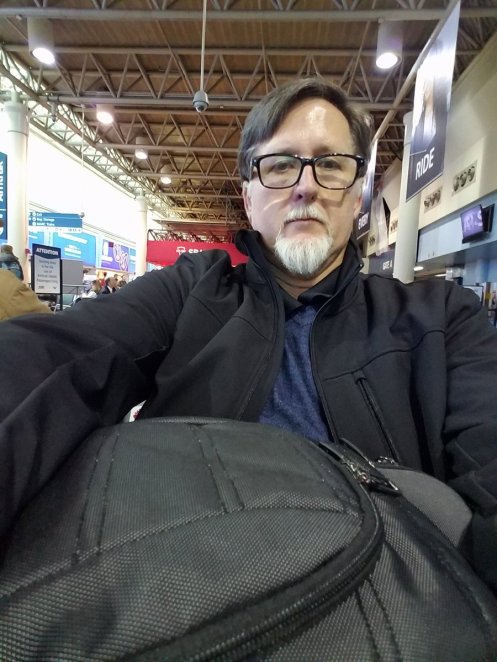
I’ve had enough. I am running away from my old lifestyle of anger and into a new, more positive lifestyle.

any other addiction it begins to wear thin over time and you need more anger to keep your “high.” This is hardly a problem as there is a lot to be angry about. Even better, you don’t even need a legitimate reason to be angry. You can spend time running conversations in your head with someone who have a minor issue with and give them responses and reasons for their responses that justify being angry at that person. This also allows you to be at least be ready to angry at them in real life when you meet to talk. One can also just create all sorts of justifications to be angry at something in the news even if one is totally ignorant of the subject. You can be angry at the weather. Or you can be angry at the weatherperson for being an hour off on a projection or for your lack of understanding what probability means.

Basically, there are a whole of ways to be angry, real and imagined.

The thing about anger is that it has a spillover effect as it rarely stays contained. This is especially true as anger becomes habit. And not only do you then spend time being angry with people you have no reason to be angry with, especially people you care about, you start becoming angry at yourself. You get angry at yourself for being angry at someone you shouldn’t be, you become self-critical in a way that leads to more anger, whether the criticism is legitimate or not. Ultimately, this leads to self-hate and self-doubt, well beyond imposter syndrome.

Self-hatred and self-doubt (which is really fear and anger is very often a response to fear, after all it is part of the “fight or flight” response) just fuel a cycle of anger. I think once you are at this point, habit is not only ingrained, it is self-feeding. Cyclical, and the cycle itself is pleasurable because anger is familiar, it’s comfortable. Something unusual happens, anger occurs, “Ahh, I know this feeling, I am on familiar ground. I am comfortable. I’m angry.”

Ultimately this lifestyle is exhausting. The body just can’t handle the constant flood of these stress hormones and the following recovery. High blood pressure, weight issues at either end of the spectrum, and a wide variety of mental health issues, are affected by the anger lifestyle. There are ways and resources to the break the habit, to change the lifestyle, but they all depend on two things (which will be familiar): recognizing the problem and choosing to do something about it.

This is what I have been trying to do to move away from anger as a lifestyle.

First, I have spent a lot time and self-searching to recognize that a lot of my unhappiness is based in the habit of being angry. I mentioned earlier that anger numbs and hides other emotions, allows one to ignore them. Happiness, joy, sadness, sorrow, frustration,  and all the normal emotions of living never really get experienced or processed. By recognizing that I have not truly appreciated and fully experienced positive emotions in a great many years, I’ve learned the real price I have paid for my anger. So, no more. The lifestyle must change.

Second, as evidenced by previous blog posts, I have been wrestling with the fact that vulnerability and weakness are not synonymous and that there is nothing wrong with being vulnerable. According to some, vulnerability  is a necessity for a full life. I have not fully come to turns with this, but I can articulate it and I am beginning, I think, to accept it as truth. “Vulnerability is the birthplace of love, belonging, joy, courage, empathy, and creativity. It is the source of hope, empathy, accountability, and authenticity. If we want greater clarity in our purpose or deeper and more meaningful spiritual lives, vulnerability is the path.”
Brené Brown, Daring Greatly: How the Courage to Be Vulnerable Transforms the Way We Live, Love, Parent, and Lead

Third, following the advice and modeled behaviors of someone I truly respect, I have been engaging in a great deal of self-care. Complete change of diet, commitment to an hour of exercise each night and achieving 10,000 steps daily when possible (sometimes schedules just don’t allow for a walk at lunch), and simplifying my life to create greater focus. And now that some of these changes have sunken in for 17 weeks, I am tackling sleep and making seven to seven and a half hours per night a priority. Along the way I will also reduce my coffee intake, less than half what I drink now. I have also been talking or writing through things, working to articulate where I have been, why I have been there, and where I want to go – and these have helped greatly.

Fourth, I am practicing kindness. Even towards myself. I have put the inner critic on notice, and am working to silence the external critic. It’s hard. Attitudes and habits of thinking and responding at the age of 55 are hard to change. Especially if they are habits based on sloppy thinking. But I am being more kind and supportive. This also means ending the inner dialogues that have too often become habit when wrestling with difficulties. It is far more successful and productive when I am accepting of people as they present themselves and remove my expectations and pre(mis)conceptions.

Fifth, I’m letting others help. I’ve stopped trying to do it all or to carry it all.  I’m learning to ask for help and allow help. This does worlds of good for reducing resentment that leads to anger. I’m also back to encouraging others, particularly colleagues, to ask for help, to not spin their wheels struggling with a problem for more than a couple hours before saying something. Struggle is good, developing self-sufficiency is good, but there are reasonable limits for that. I’m also encouraging Melinda more and more to be responsible for her own care to take it off of my shoulders.

Sixth, I have reduced input. I have reduced screen time of all kinds. I struggle with this a lot because these pocket computing devices (smart phones) were what I was waiting for much of my life. (And I said the same thing about my Casio  PocketPC.)  Also, where I used to always have the TV on as audiovisual wallpaper for both entertainment and to drown out the tinnitus, I am on my way of making tinnitus my friend. Accepting it. In the last six weeks I have spent more time in silence than I have in the last seven years, excluding outdoor activities. Reducing screen time has helped to starve some of the anger and irritation away, stripping it of its power.

Finally, I am learning to accept that I, Tod, have limits. There is only so much I can do, only so much I can be responsible for, and only so much I can do well. So I must learn not to be angry at when I hit those limits. I must accept there is absolutely no reason for me to be angry if I mishit a silly little white ball in the middle of a manicured pasture. It is a damn stupid thing to get angry about.

Anger can be positive force. There are things we should be angry about, such as injustice. It is all around us. Injustice feeds my anger but I know how to use that anger positively. I have avenues for working for justice and fairness, for equality for all. Anger helps me know when I need to step up my game there. But it shouldn’t stand in the way of living an emotionally engaged life fully connected and intertwined with others.

So not “no more anger” but “no more of anger as a lifestyle.”

Letting go of Invulnerability

I’m still struggling with vulnerability not equating to weakness. Intellectually, I can say, “Okay, fine. I get this.” But accepting it, internalizing it, is a whole other matter. I’m trying to understand why I have equated the two words and not thought about them critically. I think I am going to start by blaming Star Trek (The Original Series, ST:TOS).

From ST:TOS “The Enemy Within” airing October 6, 1966.  (Okay, so I would have been a few months short of five, so I might not have seen or understood the original broadcast. But, I have seen it multiple times since, of course.)

KIRK: Yes, I’ll make an announcement to the entire crew, tell them what happened. It’s a good crew. They deserve to know.
SPOCK: Captain, no disrespect intended, but you must surely realise you can’t announce the full truth to the crew. You’re the Captain of this ship. You haven’t the right to be vulnerable in the eyes of the crew. You can’t afford the luxury of being anything less than perfect. If you do, they lose faith, and you lose command.
KIRK: Yes, I do know that, Mister Spock. What I don’t know is why I forgot that just now. Mister Spock, if you see me slipping again, your orders, your orders are to tell me.
SPOCK: Understood, Captain.

So, all of us growing up holding Captain James T. Kirk as our masculine model got kind of screwed. Of course, this is not news. Kirk was hardly the best role model. He played fast and loose with the rules, he was cute too often where seriousness was expected, and was always putting himself and the ship at risk by being part of the landing party. WTF? When do ship captains do the dirty work? Why are all the senior officers leaving the damn ship all the time? One of the Jesuits I worked with Saint Louis University would rant about these issues whenever you gave him opening. He had a point. He also had the same gripes about Star Trek: The Next Generation but was generally most irate about ST:TOS. (Star Trek: Deep Space 9 he was happy with.) While there is an argument that a leader should be out in front, setting the example, if you study American military leadership, only the lowest level leaders, Infantry team leaders and occasionally squad leaders are in the lead. Personally, I like the idea of the leader being hands-on and first to danger, but that doesn’t make it the most rational choice.

Anyhow. Some might notice some similarities in behaviour between me and Kirk. All I can say is that it wasn’t intentional. Consider also this from Casablanca:

Rick: I don’t want to shoot you…but I will if you take one more step.
Renault: Under the circumstances, I will sit down.
Rick:  Keep your hands on the table.
Renault:I wonder if you realize what this means.
Rick: I do. We’ve got time to discuss that later.
Renault:Call off your watchdogs, you said.
Rick: Just the same, call the airport and let me hear you tell them.
Rick: And remember, this gun is pointed right at your heart.
Renault: That is my least vulnerable spot.

In both places, “vulnerable” really does seem to mean weakness. One might argue that Captain Renault is saying his heart is not “susceptible to physical or emotional attack or harm” (see this definition, which lists “weak” as a synonym) but at pointblank range with no body armor, that is demonstrably false. Of course, he’s really saying he is not emotionally vulnerable and therefore not physically vulnerable if his heart is the target. He is quite capable heartlessness as is demonstrated earlier in the movie as he preys on young women in search of exit visas to leave Casablanca. It’s a nice, casual throw-away line to reinforce an image of invulnerability.

But Shakespeare is more clear in  “Macbeth”:

“Thou losest labour:
As easy mayst thou the intrenchant air
With thy keen sword impress as make me bleed:
Let fall thy blade on vulnerable crests;
I bear a charmed life, which must not yield,
To one of woman born.”

I get this. To be vulnerable is to be unprotected. And therein lies the rub, to be unprotected just seems, well, weak. Isn’t that the mythos of the American West and modern open-carry laws? “God didn’t make men equal, Colonel Colt did.” To be armed is to be strong, to be invulnerable, not weak, to replace weakness with a weapon.

Springsteen creates the image of youthful invulnerability in “It’s Hard to be a Saint in the City.”

I had skin like leather and the diamond-hard look of a cobra
I was born blue and weathered but I burst just like a supernova
I could walk like Brando right into the sun
Then dance just like a Casanova
With my blackjack and jacket and hair slicked sweet
Silver star studs on my duds like a Harley in heat
When I strut down the street I could feel it’s heartbeat
The sisters fell back and said “Don’t that man look pretty”
The cripple on the corner cried out “Nickels for your pity”
Them gasoline boys downtown sure talk gritty
It’s so hard to be a saint in the city

The hell of it is that at I times I still feel this way. I’m too old and ungainly, but I feel it. There are times I am just walking and I feel it. I feel strong, upright and unbent by life, feeling the movement of my body and relishing in its ease and comfort. Especially now as I am lighter and growing more fit again. It’s a powerful feeling. I feel good and these lyrics are too often there I as I walk. I feel good. Strong. Invulnerable.

The exact opposite of what I am trying to accomplish. Sigh.

I keep trying to find a mindset that encompasses vulnerability that also allows me to feel good. I don’t know about the rest of you, but this is a bit of a challenge for me. I don’t particularly like even the idea of feeling vulnerable, let alone being vulnerable.

I found this blog post that is based on the TED talk by Brené Brown on the Power of Vulnerability that I have referenced before.  The author has extracted five points from Brown’s talk that make sense: be real; act with no guarantees; ask for help;  get rejected; and embrace negative emotions. I’m not very good with any of these. Depending on the context, being real is not always a problem, but in many circumstances, I’m too often playing a role and withholding some part of myself. For work, this is probably generally appropriate. At home and in the community, probably not. Asking for help is not particularly easy, especially since I enjoy problem-solving, but mostly I don’t like admitting I can’t do something, that I don’t know something and can’t find it, or that, worst of all, I actually need help (shudder).

The good thing is that I have found that when I actually ask for help, and then accept it, things actually get better. A big thank you to Laura Gogia who pushed me on this regarding an upcoming chapter being published this spring where she became my incredibly talented co-author. While I have noted improvement and it has gotten easier to ask for help, it is a challenge to change years of behavior. It is also uncomfortable to move away from the comfort of the illusion of invulnerability.

Embracing negative emotions is also a bloody challenge. Actually, embracing emotions at all is my challenge. Ignoring them, granting them  only passing acknowledgement, or processing them as anger, has been too much of my life. It’s hard, but I am trying to open myself to the moment and the emotions that are part of each moment.  Each day I  am trying a little more to let go of invulnerability.


Finding my inner fascist of self-care

On December 2, 2016 I began making some decisions about changing my life. For a number of reasons, it was quite an extraordinary day, but I am going to focus initially on one aspect – deciding to engage in a complete lifestyle nutrition change.

The years of being a caregiver and working full-time had gotten me to a pretty dark place. My weight had started to spiral out of control again last year. I wasn’t walking enough, save to play golf. I had given up hiking and backpacking because they made my wife nervous (me, out in the woods alone where something bad could happen) and because I couldn’t be away from her and out of touch all day, let alone multiple days. I quit trying to run again after brain surgery because any exertion triggers coughing and for a few years it was uncontrollable. I kind of gave up on being healthy.

Truthfully, this was not just the outcomes of the medical events of 2010. Nor of the buildup to surgery as my running and weight-training up through 2005 began to fall off, likely due, in part, to the compressing of my brainstem by the tumor. It was a pattern of my life that was reproduced far too many times. Finding relative fitness, slacking, decline, with a variance in weight of quite literally a hundred pounds.

Of course now, I am middle-aged white male, so that doesn’t really matter. It is kind of expected at certain levels.

What was missing each time was a commitment to ongoing self-care and engaging the self-discipline to do so. Then again, I don’t think ever actually decided to engage in self-care. I think my decisions were along the lines of “I will do this thing and take it as far as I can, and do the basics I need to support it.” For example, when I was running, or more accurately attempting to run, marathons and ultramarathons, I did not engage in enough of the solid background work necessary to to sustain the effort. I also didn’t do anything to change my diet or fundamentally change my approach to health, or even get enough sleep. I simply tried to put the hours and miles into my existing life without changing much else. This is not a recipe for success.

I did finish both marathons I entered, with respectable times for my size and level of training, and finished four ultramarathons, but the latter were with some terribly slow times. And it was never easy, nor quite as enjoyable as it might have been.

Going back to last December. My wife had nagged me to got a weight-loss clinic she was working with and was giving her some success. I had managed a set of changes in the spring to lose twenty pounds and kept that off, but I was stuck. So I gave in, figuring that maybe the behavioral modification coaching and accountability would succeed where I had not done so by myself. I am trying hard not to be overly self-critical in relaying all this, it is simply what was. I made the choices I made even though I knew most were suboptimal. I was practicing invulnerability to all things. Brené Brown talks about the price of invulnerability here, and yes, I paid that price, several times over.

During intake we talked about lifestyle, diet, and my weight goal. I was told my goal might be too extreme as I would end up “really skinny.” Well, no. That had been my normal weight for a few years at least and I was not skinny then . The only time I was really skinny past the age of 18 was at the end of basic training and that was thirty pounds less than my goal.  We also discussed coffee at length. Or at least they tried to do so.

When asked how much coffee and soda I consumed, I told them. In explicit detail. I could have answered “four or five cups” and been completely truthful as to the nature of the containers. The number of ounces (40 to 48) they found somewhat disturbing. And then there was the (diet) soda. Add two or three 20 oz bottles.

“Could you cut down to say two eight ounce cups of coffee and a soda only every other day?”

“I probably could, but I am not interested in doing so. How about I just drop soda and we don’t talk about my love of coffee ever again? I’m serious about this.”

That day I went cold turkey on a lifelong soda habit. I also gave up putting any milk or cream in my coffee, and booze.  I gave up all manner of alcoholic beverages. And butter. And a host of other things. I’ve changed what I eat, how I eat, and how I think about eating (albeit to a lesser degree than the other changes). As important (and successful) as these changes have been, fifteen weeks later, they are not the most important changes. What they are is a result of making prioritization of self-care a lifestyle choice.

Choosing to truly engage in self-care is the hardest thing I have done and that is, quite honestly, saying a lot. I’ve done a lot of hard things, some I never wish to do again nor wish that anyone else should ever experience. (Raising a schizophrenic child is a miserably devastating experience.) But making the decision to self-care after years of being a caregiver seems not only remarkably selfish, but scary. I know how to take care of others, but myself? Not so much. File this effort under “responsible selfishness.”

Some weeks ago I wrote about Fascism and the Caregiver. It turns out that for me, at least, I had to find and engage that inner fascist of mine and charge him with my own care. I needed to learn to practice that type of control over my own behavior, my own needs, without beating myself up. I had to redefine my environment to enact that control to make change a little easier. I also had to let that inner fascist also control my inner critic. I had to let my physical, emotional, and mental wellness take primacy in my life for the first time in decades.

https://www.youtube.com/watch?v=FN7r0Rr1Qyc

It’s working. Slowly, it’s working. I’m losing weight at an appropriate pace, although I am admittedly impatient, but I have already had to replace most of my daily wardrobe. I’m feeling better; and I think I am also generally kinder and gentler on a daily basis than I was before, but that would not take much. Each day I think about the self-care I am engaged in, I study a bit on self-care, I meditate some, and I try let each new change happen when I am ready.

Self-care can be tough. Silencing the inner critic who seems to think I have better things to do, like be productive and not be still, or better yet, not spend an hour or more on the exercise bike trying to beat Super Mario Kart 8 (actually ends being a fantastic workout). I can selfishly set aside time to do these things. It is the responsible thing to do.  The inner critic is wrong. These are the things that need to be done and the inner fascist has permission to commence beatings on the critic until morale improves.


Paying Attention

I spent this evening going through a tub of photos to put together  an album for my son who will be moving up to the north country to be with the woman he loves.

Our life as a family can be defined in three phases. This is best done by geography – Illinois, Oregon, and Virginia. The timelines are a bit uneven, and we’ve been in Virginia longer than Illinois and Oregon combined. The photos I was going through to tonight were primarily the Oregon phase of our lives. The time when he was preschool through fourth grade.

In many ways, these were some of the worst, toughest years because of the mental and emotional problems of the oldest (which have evolved into full-blown schizophrenia). On the other hand, there were some really good times and adventures for a young family. Moments in photographs where the oldest looked like a normal, well-adjusted boy.

I look at these photos and some events are clearly Christmas or birthdays. Scouting pictures are obvious – the uniforms help. Others, the memories are pretty clear: teeball, baseball, Zach’s first golf tournament, hiking Silver Creek Falls when my mom visited us in the “Great Northwet” or the “Great Gray Damp” (she wasn’t a fan). Pictures from our Great American Roadtrip – 3,500 miles from Oregon to Joplin, MO and then north to Minnesota and across with stops in Yellowstone, Rushmore, Crazy Horse, Devil’s Tower, Grand Coulee, Crater Lake, Dinosaur, and Santa Fe (not in that order).

There were also photos I had no clue about. None. Zilch. Some I can assume I wasn’t there and my wife took the pictures. Others, I can only assume I was tuned out. The sad fact is that I wasn’t always paying attention. I was either too focused on work or various projects. Or just not tuned in and inside my own head. I suppose it is possible that I just don’t remember events from 20 years ago, but it seems I should remember more.

I worry much more about paying attention these days. I’m much more present than I used to be, I know this. I spend time noticing things I don’t recall noticing before. Of course, maybe I just don’t remember doing these things before. I don’t know. I just hate the fact that I wasn’t always present.

But.

Lots of pictures, clearly not taken by me, show me walking with the boys. Holding the youngest’s hand, pointing things out, and generally engaged. These are the pictures I hope mean the most to him. Looking at digital photos in the Virginia phase, 14 years of Scouting and outdoor activities have left a great history of adventure and comradeship for the two of us. Lots of stories to remind each other over the coming years.